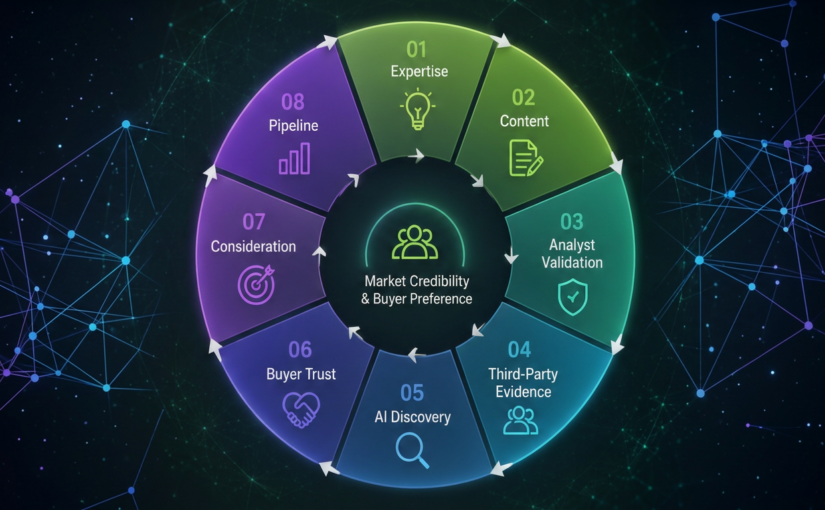
For years, B2B marketing strategy followed a familiar playbook. Companies created content, optimized it for search, drove traffic to their websites, captured leads and nurtured those prospects until they were ready to talk to sales. Analyst relations sat somewhere alongside this process, with its own goals, relationships and measurements.
That model is changing.
Artificial intelligence is reshaping how buyers discover companies, evaluate technology and make purchasing decisions. It is also changing how marketers create and distribute information. The result is bigger than the rise of AI-generated content.
The entire B2B marketing model is being reconfigured.
Tomorrow’s marketers will need to think differently about content, search, brand, analyst relations and measurement. More importantly, they will need to understand how these disciplines work together. The organizations that figure this out will have an advantage over those that continue treating each discipline as a separate marketing activity.
The Buyer Is Changing
The traditional B2B buyer journey assumes that prospects visit websites. They read blog posts, download white papers, compare vendors and fill out forms. Increasingly, that research is happening somewhere else.
Buyers can now ask AI tools to summarize a market, identify potential vendors and compare solutions based on specific business requirements. They can ask questions that once required hours of research and receive an answer in seconds. They may never visit most of the websites involved in that research.
That creates a fundamental challenge for B2B marketers. If buyers aren’t necessarily coming to your website, how do you become part of their consideration set?
The answer isn’t simply to publish more content. It is to become a credible source of information that buyers, analysts and AI systems can discover, understand and trust.
That requires a different approach to marketing. It means thinking less about individual pieces of content and more about the overall body of knowledge and evidence that surrounds a company, its products and its position in the market.
Content Is Becoming Evidence
AI has made content remarkably easy to produce. At first glance, that sounds like an advantage. In many cases, however, it is becoming a liability.
When everyone can produce a competent 1,500-word article in minutes, competent content loses much of its value. The differentiator becomes evidence. Original research matters. Customer experience matters. Proprietary data matters. Strong opinions and genuine subject-matter expertise matter. So does having something genuinely useful to say.
This changes the role of the marketing team. Marketing can no longer simply be the department that produces content. It needs to become the function that captures, develops and distributes the company’s expertise.
That means working more closely with executives, product teams, salespeople, customers and subject-matter experts. It also means thinking beyond the company’s own website, because content published by the company is only one part of the information ecosystem that shapes how a market perceives it.
The question is no longer simply, “What should we publish this month?” It becomes, “What do we know that our market needs to understand, and how can we establish our company as a credible source of that knowledge?”
Analyst Relations Becomes Part of the Content Strategy
This is where analyst relations becomes especially important.
Analysts have always influenced technology buying decisions. Their research helps define markets, educate buyers and evaluate vendors. But their role becomes even more important when AI systems are assembling answers from information across the web.
Third-party authority can provide context that a company’s own marketing claims cannot. An analyst report, market evaluation or independent assessment can become part of the evidence surrounding a company. That evidence can influence humans, but it can also contribute to the broader information environment that AI systems use to understand companies and markets.
This doesn’t mean marketers should approach analyst relations simply as an exercise in getting mentioned in reports. The opportunity is much broader.
Marketing, communications and analyst relations should work together to ensure the company has a clear point of view, credible evidence and consistent messaging across the market. Analyst relations becomes one component of building market authority, alongside customer advocacy, original research, executive visibility, content and other forms of third-party validation.
In other words, analyst relations is no longer just a communications function that operates on the periphery of marketing. It is increasingly intertwined with how a technology company establishes credibility and gets discovered.
The New Marketing Model Is More An Ecosystem
The old model was relatively linear:

The emerging model looks much more interconnected:
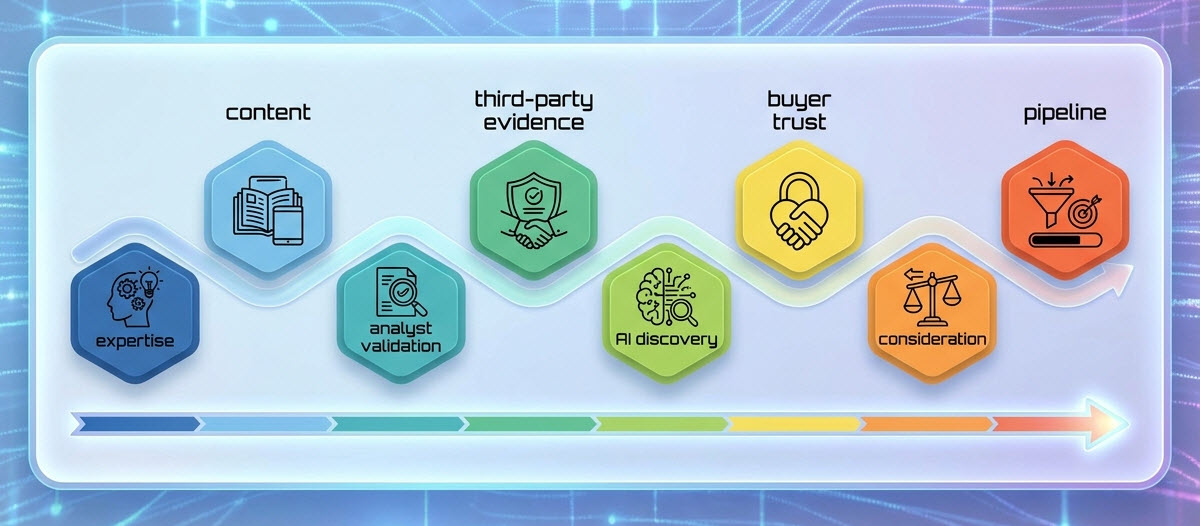
Each element reinforces the others, and should be considered part of your overall b2b marketing strategy.
A company’s expertise produces better content. That content helps establish a point of view. Analyst relationships add independent context and credibility. Customer stories provide evidence. Third-party sources reinforce the company’s position in the market. AI systems can then encounter a much richer body of information about the company, while buyers encounter that same information when conducting their research.
This is why separating marketing, content, communications and analyst relations into completely independent activities makes less sense. They are increasingly working toward the same outcome: market credibility and buyer preference.
The implications extend beyond marketing programs. They affect how teams should be organized, how agencies and consultants are engaged, and how marketing leaders decide where to invest limited resources.
Budgeting Needs to Change, Too
This shift has an important financial implication. Marketing leaders can’t continue allocating budgets based entirely on the old funnel if the way buyers discover and evaluate companies is changing.
If website traffic becomes less reliable as a measure of influence, spending more money to generate traffic isn’t necessarily the answer. Likewise, producing more content isn’t automatically a better investment simply because AI has made content cheaper to create.
Marketing leaders need to ask different questions. Are we creating information that people actually value? Are we developing distinctive expertise? Are credible third parties validating our position? Can buyers find evidence that supports our claims? Are AI systems likely to understand what we do and why we’re different? And are our marketing, communications and analyst relations efforts reinforcing one another?
These questions point toward a broader approach to resource allocation. Content still matters. SEO still matters. Demand generation still matters. But so do analyst relations, customer advocacy, original research, executive visibility, third-party validation and brand authority. A new, more holististic approach to b2b marketing strategy is needed.
The right mix will vary by company, market and stage of growth. The important change is recognizing that these investments are connected rather than treating them as isolated programs competing for budget.
Marketing’s New Job
None of this means traditional marketing is disappearing. Websites still matter. Great content still matters. Search still matters. Demand generation still matters.
But their roles are changing.
The marketer’s job is increasingly to make the company understandable, credible and discoverable across an ecosystem of human and machine-mediated research. That requires a broader definition of marketing and a more integrated approach to the discipline.
It requires marketers to understand how AI changes discovery and how buyers evaluate information. It requires them to build meaningful relationships with analysts and other influential third parties. It requires them to develop original points of view and credible evidence rather than simply increasing content volume. And it requires them to connect these activities rather than treating them as separate programs.
The companies that adapt will not necessarily be the ones producing the most content. They will be the ones creating the strongest body of evidence around why they matter and making that evidence available wherever buyers and AI systems look for answers.
That is the new world order of B2B marketing strategy.
For marketers, the opportunity isn’t to abandon the old playbook overnight. It is to rethink where every dollar, every relationship and every piece of content can create the most influence.
