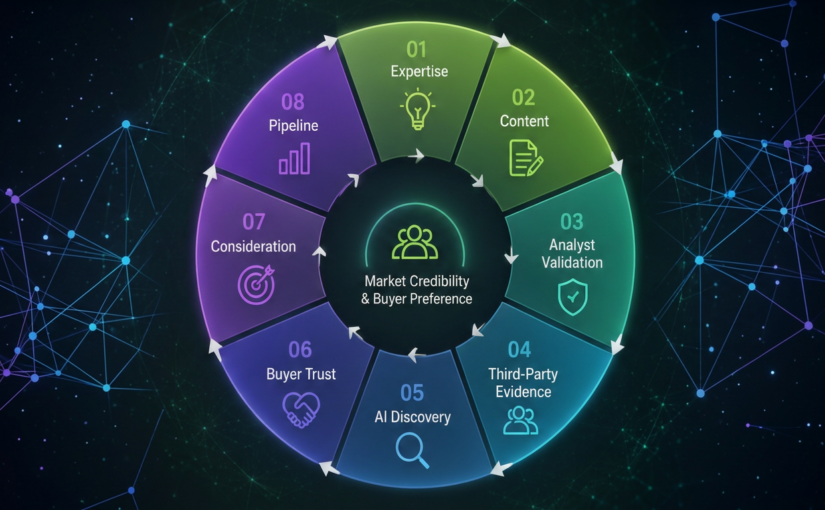
Picking the Right Analyst Relations KPIs for Success

If you ask ten Analyst Relations professionals which key performance indicators (KPIs) they track, you’ll likely hear many of the same answers. Number of analyst briefings. Number of inquiries handled. Coverage in analyst reports. Mentions in research. Attendance at analyst events. These are all useful operational metrics, but are they the right Analyst Relations KPIs?

Not necessarily.

The problem isn’t that these measurements are wrong. The problem is that they’re often treated as indicators of success when they’re really indicators of activity. There’s an important difference between measuring what your team is doing and measuring the value your program is creating.

Continue reading Picking the Right Analyst Relations KPIs for Success

Why Customer Retention Strategy is the Ultimate Competitive Advantage

I recently read about research conducted by Gartner that shared an encouraging insight for business leaders. A Gartner survey of 243 CSOs and senior sales leaders found that 73% are prioritizing growth from existing customers, with 57% ranking account retention and growth as a top three priority heading into 2026. I found this to be a welcome change in perspective – and evidence that a customer retention strategy is now well recognized as a great move.

I wrote about this topic 10 years ago, from a different perspective, Is there a Link between Customer Satisfaction and Loyalty? That article provided insights on this important alignment, which still rings true today!

Just a few years ago, it seemed that a disproportionate amount of time, effort, and budget continued to be devoted to winning new “logos” rather than retaining existing customers.

Continue reading Why Customer Retention Strategy is the Ultimate Competitive Advantage

It’s Time to Reinvent: Here’s Why Gartner Magic Quadrants Are Broken

The Timeline Problem

For decades, the Gartner Magic Quadrant has shaped enterprise technology buying decisions. Vendors chase placement, buyers study the charts, and executives reference them in boardrooms and budget meetings. Yet today, one difficult truth is becoming impossible to ignore: magic quadrants are broken.

That statement is not an attack on Gartner. In many ways, Gartner remains one of the most influential buyer advisory analyst firms in technology, and its research still carries enormous weight with enterprise buyers around the world.

The issue is speed.

Continue reading It’s Time to Reinvent: Here’s Why Gartner Magic Quadrants Are Broken

Change Is Inevitable: Growth Is Optional in Modern Marketing

I have been a Peloton fan since the pandemic. One thing that stands out is the coaching mindset instructors bring. Their guidance often goes beyond fitness into life perspective. A quote from Emma Lovewell stayed with me. Her philosophy is simple. Change is inevitable; growth is optional.

For marketers, this idea feels especially relevant today. Change is inevitable in every part of the field. New channels appear. Algorithms shift. Technology keeps advancing. Buyer expectations evolve without warning. Yet growth does not happen on its own.

Continue reading Change Is Inevitable: Growth Is Optional in Modern Marketing

The Unseen Forces Redefining Analyst Relations and Buyer Influence

I have written several articles on how the analyst relations (AR) industry is undergoing a fundamental shift driven by AI, including How Industry Analyst Relations Is Evolving in the New Age of AI and The New Role of Analyst Relations in the AI-Driven Buyer Journey. Last week, I attended an in-person conference, KCG Connects 2026, to gain better insights into this change and its implications for my clients. What stood out most is this: the industry is no longer as unified a market, with the top three firms dominating influence and activity. It has now split into a market for Gartner and one for all other firms. This change has several implications for how you should best manage and leverage the ROI on your analyst relations program.

As a fractional AR leader, my role is to help companies navigate this divide. The forces redefining analyst relations are not theoretical. They are already shaping how influence works in real buying cycles. Staying current isn’t optional anymore. It’s how you stay competitive. Here are the key takeaways I learned from attending this event.

Continue reading The Unseen Forces Redefining Analyst Relations and Buyer Influence

How Industry Analyst Relations Is Evolving in the New Age of AI

What marketers, product leaders, and technology companies need to know about the shifting industry analyst relations landscape.

I’ve spent more than 20 years working in the Analyst Relations (AR) profession. Over that time, I’ve had the opportunity to collaborate with analysts at many firms, across a wide range of industries, technologies, and engagements. I’ve worked with large global analyst organizations, boutique research firms, and highly specialized independent experts. Each relationship has offered a different perspective on how companies communicate value, how markets develop, and how buyers ultimately make decisions.

Across those two decades, the AR discipline has steadily evolved. New technologies emerged. Industries transformed. Entire categories of enterprise software appeared where none existed before. Yet even with those shifts, the core purpose of analyst relations remained fairly consistent.

Today, however, we are living through one of the most far-reaching periods of change I can recall in my career.

The driving force behind it is artificial intelligence.

Continue reading How Industry Analyst Relations Is Evolving in the New Age of AI

The Need for Customer Focus: Why Not Every Prospect Should be Your Customer

The Growth Problem Most Teams Misdiagnose

Growth problems are often framed as execution failures. The campaigns were weak. The messaging missed. The pipeline was inconsistent. In many cases, the real issue sits higher up the strategy stack. Before tactics, before automation, before AI-generated content, there is a foundational decision to make: what is the right customer focus that your company is truly built to serve?

This is the discipline of customer focus. It is one of the most overlooked fundamentals in modern marketing, and it is one of the most powerful. As a fractional VP of Marketing, I often see teams trying to fix performance with more activity. More content. Run more ads. Do more outreach. Volume feels productive, but volume cannot compensate for a lack of focus. If you do not clearly define your Ideal Customer Profile, every downstream effort becomes diluted.

Continue reading The Need for Customer Focus: Why Not Every Prospect Should be Your Customer

Unlock Better Results with Clear Marketing Personas

What Is a Marketing Persona?

Marketing personas sit at the heart of an effective marketing strategy. If you have ever asked, what is a marketing persona, the simple answer is this: a marketing persona is a detailed profile of your ideal buyer. It describes who they are, what they care about, and how they make decisions. Strong marketing personas go beyond demographics and capture motivations, objections, and priorities.

From a Product Marketing Manager’s perspective, marketing personas are not optional. They are foundational tools for positioning, messaging, and product strategy. A PMM must understand the buyer deeply to shape features, benefits, and go-to-market plans. Without that understanding, marketing becomes guesswork dressed up as creativity.

Continue reading Unlock Better Results with Clear Marketing Personas

Marketing Disruption in the Age of Artificial Intelligence

Today, marketing disruption driven by artificial intelligence is no longer theoretical. It is visible in daily workflows, team structures, and performance expectations. Entire marketing functions that once required weeks of coordination now happen in hours. AI has compressed time, reduced friction, and redefined what effective marketing looks like.

Continue reading Marketing Disruption in the Age of Artificial Intelligence

How Effective Are You at Innovation In Today’s Relentless World of Accelerated New Product Introduction?

Most product leaders say they want innovation. Fewer leaders build it into their daily work. Many fall into a quiet routine. You hit deadlines, deliver launches, and show up at meetings. You get solid marks that feel productive. Yet productivity is not progress. Not anymore.

AI is shifting every market. New competitors rise fast. The gap between early movers and late movers grows wider every month. The rules are being rewritten. The pace is punishing. You cannot rely on the same systems that served you last year. You cannot expect current processes to keep up with new expectations. Innovation is no longer optional. It is the core requirement of modern leadership.

So the real question is simple. How do you bring new ideas, new approaches, new partners, and new technologies into your work? What pulls you into those new adventures? What signals tell you that you should change your habits?

Continue reading How Effective Are You at Innovation In Today’s Relentless World of Accelerated New Product Introduction?